When ecologists talk about biodiversity, they mean three things at once: the variety of species in a place, the variety of genetic material within those species, and the variety of habitats that hold them. Lose any one and the whole system gets brittle.
Diversity is how systems stay resilient.
A monoculture cornfield can be wiped out by a single fungus. A native prairie, with hundreds of species and overlapping root depths, has redundancy built in — when one species struggles, others take up the slack. That redundancy is what makes ecosystems able to absorb drought, disease, fire, and the hundred other shocks the next century will throw at them.
It's also how systems do their work.
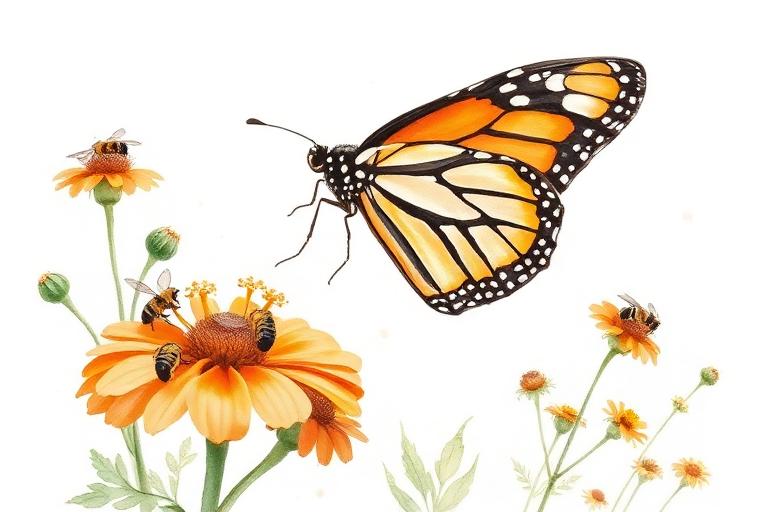
- Pollination — about a third of the food you eat depends on insects we mostly haven't named yet.
- Water filtration — wetland plant communities clean more water, more cheaply, than any treatment plant we've built.
- Pest control — every dragonfly, bat, and predatory beetle is doing work you'd otherwise pay for.
- Soil formation — fungi, bacteria, and root systems together build the topsoil that grows your food.
"To keep every cog and wheel is the first precaution of intelligent tinkering."
What you can do where you live.
Most yards in America are ecological deserts — turf grass and ornamentals from other continents. Replacing even a quarter of a yard with native plants meaningfully changes the carrying capacity of a neighborhood for pollinators and birds. Multiply that by a block, and a town starts to recover.
Biodiversity is not something that lives in national parks. It lives, or fails to live, in the places we actually inhabit.