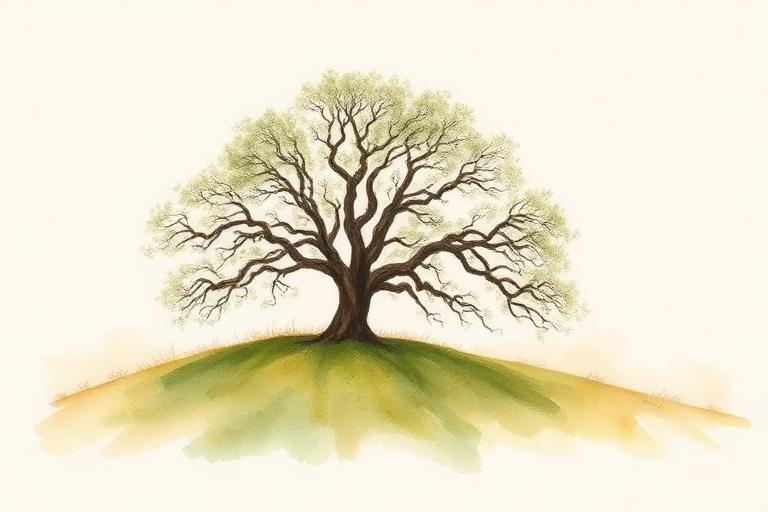
We tend to talk about conservation in the language of loss — species declining, forests shrinking, water tables falling. The numbers matter. But they bury the simpler truth: conservation is the practice of paying attention to a place over a long enough horizon that you start to notice what it actually needs.
A creek bank holds a town's drinking water steady. A meadow keeps a county's pollinators alive. A wood lot pulls a summer's worth of carbon out of the air. None of this happens because of policy alone. It happens because somebody — usually someone unpaid, usually someone you've never heard of — decided that this particular place deserved to keep being itself.
It's quieter than the headlines suggest.
The work is small. Pull garlic mustard in April. Walk the boundary in June. Talk to the neighbor whose fence is leaning into the easement. Replace a culvert before the fall rains. Most of what conservation actually looks like is rhythm — the same hands returning to the same ground, year after year, until the ground starts to change.
"In every walk with nature one receives far more than he seeks."
It's how a community remembers itself.
Land carries memory. The trail your grandfather cleared. The oak the town meets under. The bend in the river where the herons came back. When we lose these, we don't just lose habitat — we lose the shared geography that made a place a place. Conservation is, in part, an act of cultural preservation in a country that mostly forgets to do it.
It's an act of faith in the future.
Most conservation work is done for people who are not yet born. The trees you plant won't shade you. The wetland you restore won't recover in your lifetime. To do this work seriously is to accept that you are part of a relay that started before you and continues after — and to find that arrangement satisfying, not disheartening.
If you're reading this, someone before you tended the land you live on. Conservation is, at its simplest, the choice to do the same.